Wednesday, January 29, 2014

HAUNTED FYVIE CASTLE by Linda Root


Legends surrounding Fyvie castle did not begin with the discovery of bones buried within its walls during the early Twentieth  Century. The following lines were popularized during the Thirteenth Century by the well-known prophet laird of Earlston, Sir Thomas Learmonth, known in Scottish history as Thomas the Rhymer, or True Thomas.  According to the ballad  True Thomas enjoyed a prolonged stay at Fyvie during his travels, developing a close friendship with its lady. Some legends propound that it was during his visit there that he developed some sort of second sight in an epiphany that rivaled that of Saul on the road to Damascus.  And in addition to expounding prophesies,  he  collected folklore.  The best known from Fyvie is the Legend of the Weeping Stones.

Before Thomas's time, three stones  were taken from a sacred burial ground and used in the construction of the castle.  No matter where they were placed, they were always wet and a legend evolved that they would remain so until returned to whence they had been taken. And along with the legend came a curse:  until they were  returned to the burial mound, no laird of Fyvie would beget an  heir at Fyvie who would live to inherit the castle.  Whether one believes in prophesy or haunting, that part of the prophecy apparently rings true. Over the years, hardly any  son of an owner of  Fyvie castle who was born within its walls has lived to inherit it, and many of the lairds remained childless.  For example, not a single heir inherited during the recent Leith-Forbes tenure, and the famous Seventeenth Century Chancellor of Scotland Alexander Seton had to marry three wives before a healthy son was producted and Charles  was born at Dumfermline, not at Fyvie.  He had three sons, none of whom survived him and the title when to his brother, who died childless.  The property is now owned by the National Trust for Scotland, all private owners having given up the ghost, so to speak.
Fyvie, Fyvie, thou’s never thrive
As lang’s there’s in thee stanes (stones) three
There’s ane intill (one in) the oldest tower,
There’s ane intill the ladye’s bower,
There’s ane intill the water-yett (water gate)
And thir three stanes ye never get.

As to the stones, only two  of the three have been identified and only one has been recovered and is on display in the castle where it is placed in a bowl, and although it is sometimes dry,  at other times it is wet enough to fill the bowl with water.


Photo licensed and credited  © david sanger photography / Alamy


I first began my exploration of Fyvie Castle's hauntings when I was writing my debut novel, The First Marie and the Queen of Scots.  Those who have read the story know that the First Marie in my story is Lady Marie Flemying, the chief of the Four Maries, the four little girls  who accompanied the Queen of Scots to France in 1548 when they were  five or six.  Petite blonde Marie Flemying was rumored to be the only one of the group who dared call the queen to account when she was arrogant or cruel.  But in addition to her assertiveness, there was another reason why she ranked first among the Four Maries.  She was Marie Stuart's cousin. Her mother Janet Stewart, Lady Flemyng, was the bastard sister of James V, the little queen's father who died when she was six days old.  Lady FLemyng was Queen Marie Stuart's governess until she offended the French queen and the royal mistress by getting pregnant by the king.

Although Marie Flemyng was called the most beautiful blond woman in Europe by the scholar Bransom and the poet Ronsart during her thirteen years at the Court of Henri II,  there is no contemporary portrait of her or  any of the other Maries. Scenes depicting the queen and her ladies are for the most part Victorian in origin.  Historical novelists often describe her of having bright red hair, apparently relying on her nickname, La Flamina, which may have been shortened to Flamy by the queen when they were wee.  However, the moniker actually has nothing to do with her hair color, and refers to her family's origin, which traces back to Flanders. The first of the Flemyings had come to Britain with the Conquerer and Marie Flemyng's ancestors  had fought beside the Bruce at Bannockburn.
There is much inaccuracy in accounts of Marie Flemying's life after the Four Maries returned to Scotland with the widowed queen in 1561 and about her marriage to Sir William Maitland of Lethington, the most celebrated statesman of his day, whom Elizabeth called 'the flower of the wit of Scotland.' Contrary to reports on Wikipedia that the marriage was unhappy, Marie Flemyng, Lady Lethington, remained at her husband's side within Edinburgh Castle during the Lang Siege (1570-1573') and fought to keep his body intact after his enemy the Regent James Douglas, Earl of Morton, sought to have it posthumously tried and subjected to a traitor's grisly death. She plead her case to Cecil and Elizabeth and won, Elizabeth declaring that in England such punishments were reserved for the living, and that Maitland had died innocent before the law.  Many historians state  that Lady Lethington  never remarried after Maitland's death but that is not so. They just have not looked beyond the popular sources. Other sources mention that Maitland was her second husband, and that  George Meldrum who was a favored Scot at the court of Henry  VIII and present at the monarch's deathbed was her first husband. Any historian worth his salt can see the problem there, since Henry Tudor died in 1548  and his Scottish friend  died soon after. But using the name George Meldrum as a starting point, I began to search for a Meldrum-Flemyng connection that made sense, and with only  minor effort found that Marie Flemying, married George Meldrum, Lord Fyvie,  the laird of Fyvie Castle sometime after 1583, at least ten years after Maitland's death. Lord Fyvie was childless at the time of the marriage and remained so, and thus propagated the curse. He was also one of Scotland's most beleaguered  debtors.  On the surface it might appear as  if Marie Flemyng did  well for herself  by marrying an important baron, but such was not the case.  Records of the courts in Aberdeenshire indicate that she was often a party to lawsuits stemming from her husband's debts and spent considerable time in court until failing health excused her of further appearances.    One wonders if The Rhymer's curse was contagious, because during her short terms as Lady Fyvie, not only was Meldrum's  castle and his title sold to Alexander Seton , but Lethington Towers was lost to the Maitlands  when Marie Flemying's  brother in law John Maitland bought it from her son James 'on the cheap' and sold it outside of the family to pay a debt allegedly owed by young Maitland to his Seton cousin Alexander, who by then was the new Baron Fyvie.

 And that brings us to the story of the castle's most famous ghost, the Green Woman. who is believed to be a victim of Alexander Seton's ambition and greed.  She haunts the castle dressed in a diaphomous green gown, and leaves the scent of roses in her wake.  But is she Lilias Drummond?


Alexander Seton is an interesting character, one of the prominent Catholics who survived the Scottish Reformation in spite of his unwavering support of the Queen of Scots, and not just during the Douglas Wars, but as long as she lived.  Not only did he remain a prominent member of the government of James VI, but he became a Privy Counselor and the de facto guardian and tutor  of the king's second son, the slow developing Prince Charles, Duke of Albany, later ill-fated king Charles I. How much of  King Charles's  shortcomings may be laid at the feet of Alexander Seton is open to debate, but Seton obviously supported the king's Catholic leanings.  The Setons never were recusants. They were known Catholics throughout  the period when most of the Catholic aristocracy either fled to Europe or went underground. After the ascension of James VI to the English throne as James I, Seton continued in His Majesty'ms service and in 1605 was made Earl of Dumferline. He was very much a favorite of  the Danish consort, Queen Anne  who converted to Catholicism shortly after her husband James's ascension.  But if there was one disability that plagued Seton, it was that his wife Lilias Drummond had provided him with a chain of daughters, but not a single son. Like Henry VIII, his affection for Lilias  waned and he found himself another prospect.  And like Henry Tudor, the first wife made way for the second.  The controversy has to do with the means by which the switch took place.  Some stories have him sealing her into a small secret room and starving her to death,  but the more likely explanation is that he sent her off to one of his estates  in Fife and openly took up with the other  woman, Lady Grizel Leslie of Rothes.  In 1601, the formerly happy and healthy Lilas died quite suddenly and within six-months,   Seton married Grizel. But their  wedding night was less than blissful.  It seems there was a third party in attendance.  The newlyweds were kept awake by a cacophony of sounds coming from just outside the room. The next day the name D. Lilias Drummond was found etched on an outer sill at an inaccessible height. It is still faintly visible.


 From that time forward, there have been appearances of a female apparition called the Green Lady and there is  a recent recording of the sounds she makes on You-Tube and a photograph of a strange glow visible from the courtyard after dark. In keeping with the curse, Seton's second marriage yielded no son, but the third one was the charm. Although the second Earl of Dumferline was not born at Fyvie and was attainted for taking the losing side in the civil war, he did have two sons, neither of which left a male heir. Ownership of the Castle passed to the Gordons.  Adding to the  mystery, a painting that had apparently hung in the castle and which was said to be a portrait of Lilias Dummond, although not a contemporary one, has repeatedly gone missing only to reappear, and currently has disappeared again, without a trace as to its whereabouts.  Apparently a black and white photograph is all that remains.


There is another female apparition keeping the Green Woman company, a ghost known as the Grey Lady, and she is much more confrontational that the Green Woman. She is not as noisy as Lilias Drummond, but those who have seen her find her much more frightening. Some say she was the daughter of one of the early lairds and  was locked away to keep her from going forward with an unsuitable marriage. Others, including Helen Murphy Howell, whose post  Murder, Curses And Ghosts - Fyvie Castle in Scotland is more comprehensive than this one and is highly recommended, propounds the theory that the Grey Lady is the ghost of one of the  early Lady Meldrums, a contemporary of True Thomas, and that she had expressed a wish to be buried within the castle. Her spirit rested peacefully within a secret room until her bones were discovered and removed during the 1920's during a renovation by the Leith-Forbes owners.  The problem with the theory expounded by Ms. Howell is the fact that the Meldrums did not acquire the castle until much later.  There is no authoritative identification of the remains, but they are most certainly real. At the direction of the owners, the remains were removed and buried with dignity and care in a nearby cemetery, but the  Grey Lady was not happy, and it was then that the haunting began, and they were apparently disturbing enough to drive the workmen and servants to find employment elsewhere. The owners were sufficiently impressed with the credibility of the reported sightings that the bones were exhumed and reburied in the secret room where they originally had been discovered.  However, the cursing and the wailing of the Grey Lady did not stop and now the room has been sealed off.  In Michael Balfour's book  Mysterious Scotland: Enigmas, Secrets and Legends  he places the secret chamber  below the Charter Room where there is a sculpture of a turk's head apparently associated with Lord Byron,  and dating to  the period when the Gordon family held title to the castle.
 Below it there is a  sealed window that is generally believed to close off the secret room.  According to legend as  Balfour states it, if anyone dares to break into the room the intruder will perish and any surviving spouse will go blind.  At that point, the owners sold the property to the Trust.

There is yet another significant apparition associated with Fyvie Castle  dating to the Seventeenth Century,  and that one is male. He appears as a young man clad in tartans who stands outside of the castle walls in various locations on the grounds.  He is commonly linked to a tale of unrequited love in which a man named Andrew Lamb, who had been the laird of Fyvie's trumpeter plays a major role.  Unfortunate Andrew was sent into involuntary servitude because he had fallen in love with a miller's daughter, a comely lass named Annie, who was coveted by the laird, which in the eyes of the miller was a much more profitable match.  Thus, both the current Lord Fyvie and the miller sought to rid themselves of Andrew. By the time Andrew returned from the West Indies, his beloved Annie had died of a broken heart.  In retaliation, Andrew placed  a curse upon the castle and it's owners, declaring  that trumpets would sound to announce his presence whenever a laird of Fyvie lay dying. Over the years there have been numerous reports of the sound of a trumpet and the sighting of a young man dressed in tartans.  The tale has been propagated by the folk ballad The Trumpeteer of Fyvie, also know as the Ballad of Mil Tifty's Annie. The Annie in the folksong is alleged to be Agnes Smith, who died in January 1673 and is buried in the Kirkyard at Saint Peters in Fyvie. The statue atop the turret at Fyvie is believed to be that of Andrew blowing his horn at the mill.
Photo by Stanley Bruce (Bard of Buchan)


There is no explanation offered as to why a laird of Fyvie might have wanted to place a likeness of Andrew Lamb (Lamme) on the tower at Fyvie, except perhaps to appease the apparition and transfer blame to Annie's father.
To readers  interested in the haunting at Fyvie Castle, there is even a site where one can purchase items said to have magical powers and which  are fashioned from the heaps of  trinkets left as tributes to the ill fated lovers by visitors to the secret room where the Gray Woman's remains were reburied  before the laird had it sealed off.  There are several versions of the ballad  of the trumpeter available as CDs. There are many different versions of the story of the Green Lady, who generally is a rather benevolent ghost who appears as a well dressed beautiful woman dressed in fine clothes consistent with an  early Seventeenth Century aristocrat who leaves a scent of roses in her wake. She is a much less aggressive apparition than the one portrayed in my current work in progress, The Green Woman, who is the Guardian of  Ferniehirst Castle in Roxburgeshire on the Borders.  The first Countess of Roxburge was Marie Fleming's daughter Margaret Maitland.


Wednesday, January 8, 2014

A preview from 1603: The Queen's Revenge, Part III of the Midwife's Secret

The novel 1603: the Queen's Revenge takes place in 1602 while Scotland and England both await the unspeakable possibility that Elizabeth Tudor may indeed be mortal.  She had been queen of England for more than forty years, and if truth be told, her subjects had grown tired of her. Years of failed harvests and indecisive leadership had prepared them to welcome her successor, and most of heads had turned north toward the homeland of her cousin James VI, King of Scots.  Our scene opens as Queen Anna's secretary, a member of the privy council and a member of the king's inner circle hovers in the shadows of Canongate street, a stone's throw from the window of the woman who held Will Fowler's heart in the palm of her hand--the famous wad wife, Mistress Daisy Kirkcaldy, presumptive widow of Will Hepburn, bastard son of the man who had seduced the Queen of Scots and brought her to her ruin. To Fowler's consternation and the distress of Daisy's friends, she refused to accept her husband's fate and and consoled herself by marketing treasures she imported from the Low Countries to Scotland's rising merchant class, and lending them the funds to cover their purchases at a high rate of interest.  Fowler's efforts to court her properly had met with the rebuke that until someone brought her Hepburn's bones, she was a married woman.


William Fowler was a poet and a courtier with the proper blend of intellect and grandeur to gain admission to the inner circle of the king --  the small band of poets to which James VI himself belonged. The king had jokingly dubbed the group ‘the Castilians.’  To those who remembered Scotland’s mid-century politics, it seemed an odd designation, since both of the earlier groups to which that label had affixed had been rebels and did not fare well. But James Stuart was a man of many anomalies, none of them well defined. So, indeed, was Fowler.


There was more to Fowler than just the attributes he displayed at court. When he was younger he had been an agent in the pay of Elizabeth’s spymaster Sir Francis Walsingham. While he was careful not to flaunt his past allegiance like a badge on his sleeve, Fowler was a conspicuous Anglophile, and with Elizabeth Tudor approaching seventy, that made him a perfect friend for James, who coveted the English crown and expected Fowler to help him grab it up. On the list of topics that Walsingham had assigned Fowler to explore during his years in England's service was the mystery of Loch Leven and the Earl of Morton’s obsession that there had been a live birth of a daughter to Marie Stuart, the ill-fated Queen of Scots. Other than a report of questionable veracity from the queen’s French secretary Claud Nau whose information had come to him years after the fact but allegedly from the lips of the queen, there was not a shred of evidence to support the myth. Walsingham had disregarded it entirely until he personally interrogated Nau, who insisted that the child had been smuggled out of Scotland and into France, where she had been hidden  in one of the Benedictine houses controlled by her mother’s French relatives, the Guise. Nau speculated that the child had been sent to the convent at Soissons, since it was under the patronage of the Guises, but Nau was only guessing.

Even after speaking to Nau, Walsingham regarded the legend of the hidden princess as nothing but an interesting coincidence until his spies in France reported the presence of a mysterious Scottish child that the nuns at Saint Pierre les Dames in Rheims called La Belle Écossaise . She had been brought there as a young child by the abbess Renee de Guise, Marie Stuart’s aunt, and her name was Marguerite d’Kircaldie. Walsingham  asked  Fowler to check it out. But before his report was submitted,Sir Francis died and William Cecil took over the control of Elizabeth’s spy net work.  After the Earl of Morton was executed and the young king freed himself of his controllers,  Fowler’s redoubtable mother Janet Fockart  gained high favor with the James of Scotland, since she was his largest creditor and he was vigorously acquiring the finer things in life.  Fowler severed his ties to the Tudor court and returned to Scotland. Before he left, the Cecils encouraged him to wiggle his way into the king’s inner circle and pass along anything that might interest them.  Young Robert Cecil told of  his concerns over efforts being made by exiled English Catholics to identify and promote Catholics exiles with ancestral ties to the English succession.  Cecil presumed that would include the mythical nun suspected of being the daughter of Marie Stuart and the former Earl of Bothwell Lord James Hepburn. In spite of public policy to the contrary, Gloriana was not expected to live forever and the Cecil were anxious to eliminate any threats to their own dynastic plan which had already settled on the Scottish king.
Thus, it was more than just a heavy dose  of inquisitiveness  that drew Fowler to his mother’s pretty young protégé‎, a lass whose birth name was Marguerite Kirkcaldy, and who was known in the Canongate as the posthumous bastard of the executed  knight of Grange and a laundress working in Edinburgh Castle during the siege.  Although his mother’s young friend had the same name as the subject the Cecils wanted him to investigate, she was far too young to have been the fabled infant from Loch Leven. Nevertheless, the fact that the two women shared a name suggested a link between them.
However, when Fowler discovered that the Kirkcaldy lass and two Scotsmen, the king's browdinstair Will Hepburn who Daisy  later married,  and her notorious Reiver nephew Sir Andrew Ker of Ferniehirst had visited Saint Pierre les Dames du Rheims as guests of the abbess Renee in the winter of 1596-1596 his interest was piqued.  When he confirmed that Hepburn was the bastard son of Lord James Hepburn, Marie Stuart's husband at the time of her imprisonment at Loch Leven Castle, he was certain he had uncovered a pot of gold. There were enough exiled Scottish nuns who had found haven at Saint Pierre but with families living in Scotland for Fowler to easily glean the information that while she visited there, his mother's protege Daisy Kirkcaldy was often seen  in the company of the nun with whom she shared a name.  It was not enough to prompt Fowler to send a dispatch to Robert Cecil, but  it provoked him into paying more attention to his  mother’s youngest and brightest protégé.  After  his mother died, he continued to keep an eye out for her and his interest in Daisy was no longer purely political. When Daisy Kirkcaldy’s husband Hepburn was reported lost at sea, Fowler realized that his natural curiosity had developed into something deeper. The most eligible bachelor in the Midlands had become infatuated with the widow woman.  Mistress Kirkcaldy had taken the news of her husband’s drowning with the stoicism Fowler  associated with his thrice widowed mother and went on about her business. If she shed a tear, she did it in the privacy of her apartments at Cockie House. Fowler began to wonder if the newly widowed wad wife might make a perfect  partner in the tricky game called life. 
He knew that Daisy assisted her half-brother Gilbert in his shop, but since discovering her knack for moneylending she had left most of the hammerings to Gil. But the new royal goldsmith George Heriot, who had purchased some of her designs  could not quite duplicate them to the satisfaction of Queen Anna. Thereafter, Daisy limited her labors at the jeweler’s bench to an occasional piece for the queen, and devoted most of her passions to money-lending and the raising of her child. Fowler was elated when she hired his old nursemaid to assist her.

The inhabitants  of CockieHouse were an industrious lot, the kind that appealed to Fowler’s Presbyterian morality.  It did not hurt that Mistress Kirkcaldy was the most attractive woman in the Canongate—tall and sturdy and very Scottish, a worthy daughter of the laird of Grange. The only drawback was that the pretty wad wife showed no interest in marrying again and was holding on to a fantasy that Will Hepburn had survived  the sinking of his merchantman by a Spanish galleon.
Thus, on the brisk autumn evening when Fowler lingered in the close across the street from Cockie’s House, he was not there to spy.  He was playing the role of a lovesick suitor, afraid to cross the avenue and knock on the door at so late an hour, settling instead for an occasional back lit tableau  of a shadow women appearing through the linen of the summertime window coverings. Had he been the least bit brazen he would have marched directly to the door instead of cowering in the darkness, and would not have seen the figure of a man lurking in the narrow alleyway between Cockie House and the residence next door to it.   Because he was a spy and by nature, curious, he put his love-sickness aside and summoned forth his tradecraft.


The man held an object in his hand that Fowler could not identify until the clouds enshrouding the moon blew on.  It was a grappling hook of the sort associated with maritime combat from the time the Roman’s invented it in the third century. Once Fowler had identified it, it was not hard for him to spot the coiled rope on the man’s shoulder and to conclude that the man was up to no good.  Fowler set aside the bouquet of asters he had been carrying and reached for his sword, but he did not charge across the street foolhardily. Sir Francis  Walsingham had taught him that information was often a greater prize than  an opponent’s severed head. Hasty action often led to ultimate defeat. Besides, Fowler was in no rush to get himself killed.

He was puzzled by the man’s inactivity. He remained in the darkness, as inanimate as Fowler, still grasping the hook but making no move to use it. Fowler wondered at the man's inaction  until he applied his familiarity with the surrroundings to the problem.  After dark, Canongate was a relatively quiet street, not at all like the High Street in Edinburgh where there were busy inns and taverns.  The Canongate was more residential. Fowler also knew that  grappling hooks made a noisy clanking sound when they hit their targets. The man outside the Cockie House was waiting for the bells of the new Canongate Tollbooth to mark the hour.

At the first sound of the bells, the culprit wound up the chain and let loose of the hook.  Before the resonance had dissipated, the prong was solidly lodged between the  wings of a smiling gargoyle positioned near the roofline. The man gave it a healthy tug before he began to climb. Fowler ran across Canongate Street like a mad man and launched his body at the spot where the man’s boots met the wall.    With Fowler hanging onto his feet, the man could climb no higher.One more minute and the invader would have been out of Fowler’s reach.

The man  had not seen Fowler coming out of the shadows or he might at least had launched some well placed kicks. But he had been  too preoccupied with falling to notice what was happening until he felt the weight of Fowler’s substantial body pulling him down. He let go of the chain and fell on his back onto a row of stacked flower pots. Fowler thought he might have broken the intruder’s back until the man raised himself on an elbow before he fell back onto the paving stones and swooned. Before he was able to check the injured man,  he felt a heavy hand fall on his shoulder, and Gilbert Cockie knelt down beside him.  Fowler did not need to explain the scenario. The dangling chain and the hook told the story.Someone had already sent a runner to the Tollboth to sound the alarm.

When the Constable of Canongate arrived, the three men speculated that the injured man was a burglar seeking to pillage Gilbert’s store of precious gems and metals, until Gil  searched his  pockets and found a crude sketchmarked with an “X”.
“Daisy’s window,” Gilbert said, gesturing upward to the lighted casement in the upper story.
“Looks like ah cannae throttle him  right off as ah would like…not until he tells us what he’s doing here and who set  him on ma sister.”
It became vital that the man survive long enough to be questioned.
“It is too far to the infirmary,” Fowler announced.
“Help me carry him inside the house. We can ask our questions there, without interference from the neighbors.”
Walsingham would have applauded his decision.  The Constable was certainly happy with Fowler’s suggestion, and gave it his tacit approval with a malevolent leer. Cockie  took one leg and the Constable took the other, and the robust pair  lifted the man by his shoulders. Fowler grabbed his boots. By the time they reached the door, the servants had congregated but let them pass inside.

Daisy stood near the bottom of the inner staircase.  Her eyes locked with Fowler’s. She had already guessed that the episode had something to do with her. They deposited the man on the floor and the varlet Mat Hamilton checked his pulse while Fowler handed her the sketch. He may have been lovesick, but he was still too level-headed to hide the truth from anyone as astute as Mistress Kirkcaldy. She did not fit the role of a damsel who needed protecting.  She walked over to the unconscious man and kicked him in he ribs.

Daisy’s  varlet  Matt Hamilton searched the intruder thoroughly  while Fowler and Gilbert looked on. The Constable was outside canvassing the alleyway between the houses, looking for clues among the broken shards of pottery.  Daisy stepped back and  hovered by the door, not out of fear but to keep the gathered onlookers off the stoop. She had sent her housekeeper Isabeth upstairs to make certain Peter remained sleeping in his room.  He was already too curious for his own good. She was relieved that Peter’s nursery window had not been the target. If it had been, she would have taken the poker from the hearth and bashed the villian’s head in, and there would have been no  hope of getting any of the Constable’s  questions answered.

It was no surprise when Hamilton discovered that the trespasser had a small dagger called a sgian dubh tucked in the folds of his clothing.  All that  did was identify him as a Scot and not a foreigner. Daisy kept one of her own in a little pouch tied around her waist.  But the intruder had several pieces of coiled and knotted animal hide with handles attached at the ends in the pocket of his weskit.  When Hamilton raised them up for all to see, Daisy’s hand went to her neck.

Hamilton had grown up in Fifeshire on a farm and he probed the man as if he were an injured sheep. 
“He seems to have a chipped tailbone and a dislocated hip. The remaining injuries are less severe.   He needs to go to the infirmary in the Tollbooth –not the one up the road-the one in Leith. 
They have a military surgeon who deals with such injuries. We could arrange a horse litter.”
“Or we could dump him in the Nor Loch,” said the Constable who had finished his search outside the house.
 “The rapscallion had a purse of Spanish gold,” he added, tossing a pouch on the table.
The prisoner began to moan and opened his eyes.  Gil threw a pitcher of water in his face to rouse him. When the man  recovered his senses, Fowler began to question him methodically, much like a parent questioning an errant child.  His target’s  only response was a series of negative head-shakes . 
Daisy had endured enough of Fowler’s mollycoddling. The man has been sent to do murder.  There was no other reason for the knotted cords.
She left her station beside the door and marched across the room and fell to her knees.  She reached over with her left hand and grabbed a handful of the man’s hair and lifted his head off the tiles.  Then she reached into the folds of the kirtle with her right hand, withdrew her own sgian and pressed it against his throat.
“Dinnae think that ‘cause ah am a lass ah will nae slit your  throat, ya filthy scag,” she said, bearing down with the blade until it drew blood.  She put her finger to it and then pressed her bloodied finger to his lips.
“Ah dinnae have time tae  play games wi' the likes of ye.”
“Perhaps I’d best have another look in yonder alley,” the constable said as he withdrew. What Mistress Kirkcaldy was prepared to do did not need require witnessing by a representative of the law.
“Ya see, even yonder  lawman  knows that ah’ll do it,” she said, applying more pressure to the man’s neck. Her act not only drew blood, but also generated a grunt.
Daisy released her grip on the man’s hair and let his head slam down on the tile.
He  looked first at Hamilton and Gilbert, and then settled his eyes on Fowler.
“Cannae ya gents save me from yonder She-Devil?”
Hamilton  turned his back to hide the laugh he could not suppress, and Fowler prepared to join the constable outside..  Aiding and abbetting a murder was not a proper activity for a member of the king’s council.
“You gents can handle him, I reckon.  I’ll go outside to help the constable search the grounds and shoo away he crowd..”
“Aright!”
The man’s call was desperate.
Fowler turned back. 
“Perhaps it’s better that I stay.” 
Then he joined Daisy and knelt beside the man.
“Give the lady the name of who it was that sent you here and she’ll likely let you live.”
“Please, Mistress—A rag to stop the bleeding on the back of ma head and then ah’ll tell ya..”
“Only to save the Turkey carpet, ya vermin.”
She instructed Matt Hamilton to bring some rags.  When he came back with a basin and some linen, she told him to lift the stain from the carpet as best he could and roll it out of the way. Then she took the wet dirty toweling and rung it out on the injured man’s face.
“Daisy!” 
“’Tis only water, Brother. Would ya rather ah’d pished on him?”
Gil Cockie was seeing a different side of his sister, and so was  William Fowler.  Daisy  was behaving exactly like Janet Fockart  would have behaved in the circumstances.
“Hamilton, dinnae ye have a cousin who was a butcher?” Daisy asked.
“Aye.  He taught me all I know about dressing game,” Hamilton responded with a wink.
Hamilton had known Daisy Kirkcaldy for a long, long time. She had grown into a replica of his  prior mistress Jean of Argyll, who spared no indignity to her enemies and took no prisoners. Hamtilton knew exactly what was expected of him, and he was thoroughly enjoying his role.
“Best we let the neck be for now and pierce him in the belly instead. That way he's sure to bleed out nice an’ slow. No sense being too quick about it. The constable is an old mate of mine.  He’ll be happy to tell the others that the pisser  fell on his blade.”
Daisy sported a devilish grin that her captive could not see from where he lay but  Gil and Fowler saw it and finally caught on to Matt and Daisy's game. Foster stood up and assumed the threatening posture he often used at court to enforce his will. Gil, who needed nothing more than his size to intimidate the fearless, began sharpening his knife on the leather strap he used to hone his carving tools.
“It was the Armstrongs-- Jock’s boys!” the man shrieked. “They offered us a fistful of  money.”

Daisy let his head fall back against the floor. Blood from the head wound spattered on the tiles.
“Ah know the Armstrongs well enough. Cutthroats and hooligans they well may be but ah cannae recall a time when they dinnae do their own dirty work. What you speak of sounds more like the Eliots than any Armstrong ah have e'er met.”
“The husband is the Armstrong. The Missus is the Eliot.  She would ‘a come herself but he wouldnae let her since she is expecting to drop her bairn before the Saddurday.”
“And who would the likes of ya be to land yerself in the middle of this mess.”
“The only one a’ us Eliots dumb enough to take the purse ma sister  offered.”

Fowler saw his opening.  The Eliots and Armstrongs had been locked in a blood feud with the Hepburns since before anyone could remember. Historically,  Borderers had pursued  their vendettas in the Borderlands, but even the strange protocol of the Reiver bands was changing. He was not surprised that they were bringing their vendetta into the city.  But the plan did not seem like the concoction of any Borderer.

“Are you saying that you bought your way into this cowardly deed because Mistress Kirkcaldy’s  dead husband was a Hepburn?” 
“Oh Nay. Nothing at all like that, Mister. We made our peace with Will Hepburn long ‘fore he upped and disappeared. It is his cousin Bothwell who churns our innards.  And ah was nae sent to kill the little wadwife. Ah  was supposed to threaten to stick her bairn if she dinnae tell me where her nephew Ferniehirst is headed, but ah had no intention to do the evil deed. ``
"Why would you care where Sir Andrew Ker of Fernehirst's travels take him?"
"He has gone abroad to meet up with the king's cousin Wild Frank Stewart, the crazy earl of Bothwell,  and there’s a pot of English silver for the man who can tell Mister Robin Cecil when and where.”
“Liar!” Daisy hissed.  “My nephew spits on traitors the likes of Lord Francis Stewart.”
Daisy had drawn the sgian dubh from the folds of her nightdress and was fumbling it.
Fowler was not certain what Daisy planned to do with her dagger, but she appeared about to wield it, and to be on the safe side, he wrapped his cloak around her so she could not strike.It was like trying to restrain a wild piglet in a burlap sack, but with her brother Gilbert’s superior strength they finally settled her. She did not seem happy when they demanded she surrender the knife but finally she passed it to Gil.  Fowler decided to be careful never to cast aspersions on any of her kinsmen.
The man on the floor was noticeably relieved.Tears began to flow.
“What else?” Fowler said, sensing that this was his chance to wring the rest of it from the half-crazed prisoner before the head wound rendered him unconscious. Fowler had his own history with Francis Stewart dating back to a trip he had made to Naples in 1598 ostensibly to purchase art for Queen Anna, but actually to investigate rumors that  Bothwell was soliciting a group of Italians as potential financiers of a Scottish invasion. The man on the floor was quite correct in calling Frank Stewart mad. It turned out that the Italians were not bankers but sorcerers and witches. Bothwell brought the men to Brussels where the magicians failed to find a way of invading Scotland through occult means, and Fowler laughed the whole way home. He conjured up his own visions of the Orkneys being invaded by Italians on broomsticks.  In any case, it appeared that Bothwell was back to his old pursuits and again conspiring with Sir Andrew Ker. Although Mistress Kirkcaldy  may have scoffed at such an alliance, Fowler did not like the sound of it. Ferniehirst had been staying away from court and had openly disagreed with the king’s blatantly pro-English policies. It would not have been the first time that Kerr had entered Bothwell’s camp. He gave the man a sip of ale to urge him to continue talking.

 “Ah swear tae ya, Sir, that is the whole of what ah was told,  but ah  heard my cousins talkin’ to another man—an Englishman who runs a livery out of Berwick and who does business with us from time tae time—horses for the most part. But sometimes he brokers jobs that require talents other than rustling, skills special to a few of ma kinsmen from Liddesdale  of the sort ya wound nae want tae meet up with.  Ah dinnae get the whole of it, but from the gist of what ah heard, it has to do with fouling a plot to put a split-tailed papist nun on the Scottish throne,  and Ker and Bothwell are in the thick a' it.”   "Sweet Jesu, not again," Daisy said with a sigh.


This is an unedited draft of an early part of  1603:The Queen's Revenge.  The storyline follows the second book in the Midwife's Secret books, The Other Daughter: Midwife's Secret II,  in which we meet Daisy Kirkcaldy, Will Hepburn and Sir Andrew Ker of Ferniehirst, as they become embroiled in the mystery of La Belle Ecossaise, Sister Marguerite d' Kircaldie.  


Sunday, January 5, 2014

Beyond Naked Nepotism : A Biased and Unabashed Review of a Gem of True Literary Fiction

Today I am treating myself to the guilty pleasure of writing a review of the 132-page novella, The Mischief of Robert Kyd.  

 George Courtney Ward,c.by permission of ITV .pl c.

Michael Marsh

The pleasure comes from that fact that I love everything about this book: the unabashed guilt comes from the fact that its author is my oldest son, the one to whom I read Marek Hlasko's Eight Day of the Week aloud in 1975 while he was still in the womb. I also read MacBeth and Hamlet, favorites that we share.   But enough of that. Other than the fact that I take some remote responsibility for its creation, what about the book?  

First of all, I love the cover, and not just because I am old enough to recognize it as a photocell from the 1963  black and white rugby film This Sporting Life, starring Richard Harris, to whom I light a candle on Irish  holidays.  To understand its selection, you have to understand the author.  Nothing about his work is casual.  Every word counts, every encounter is calculated, every calculation serves a purpose.  There is a passage early in the book where one of Kyd's acquaintances remarks that he bears a resemblance to the Irish actor Richard Harris in his youth, and that is not an accident.  The author has admired Harris all of his life, he grew up to the sounds of Harris singing James Webb's MacArthur Park from the album A Tramp Shining.It remains one of my two favorite CD's but the remastered is nothing like the thrill of hearing the original when there was still romance in popular music and the sentiments were valid in another time. 
My favorite CD's (except of course Lynyrd' Skynyrd's Platinum)
I not only indoctrinated Michael with Harris's little known identity as a singer. I also took him to his films; the first one I recall was  A Man Called Horse--or was it Camelot? But when he grew older  and studied film at UC-Santa Cruz, Marsh discovered Harris's  early works, most notably the 1969 black and white rugby film, This Sporting Life. And thus you have the mystery of the cover solved--Or, perhaps not quite.  While the cover is indeed  the youthful Richard Harris from a  movie poster, it is also a still shot of the enigmatic and unpredictable globe-trotting American iconoclastic photographer Robert Kyd, but it is also a glimpse into the persona of Michael Marsh, a thirty-something  American expatriate who presently lives in Berlin and dares to write genuine literary fiction instead of action thrillers or Scandinavian detective stories.  The cover photo was enough of an inspiration to him as he created his protagonist Robert Kyd to prompt Marsh to pay a king's ransom for the right to use of the photo. 

I have told you why I like the front cover image, but what about the back cover text? Many writers tend to clutter the back text with endorsements from other authors and lists of raves of the author's other works, including the number of copies sold, but in my mind, that is not the purpose of back cover text, which should give the potential reader a clue as to what the book is about without spoiling the story line or displaying  a photo of the author and his/her dog, (as I do in The First Marie and the Queen of Scots).  You will find no photo of the very private Michael Marsh on the back cover of Robert Kyd and no mention of his previous short stories and novellas ( Jinn, The Totheroh Club and The Chronist), which is a good thing, since Robert Kyd is nothing like his other works.


Books by Michael Marsh

What you find on the  back cover of Robert Kyd is a promise that while the story is a contemporary Mediterranean adventure, it is not of the ilk of a Clive Cussler or James Robbins, and certainly not a Dan Brown, and not just due to brevity. There are no dedicated archaeologists, no buried treasures, and no bones of Apostles or wood chips from the Cross to which Jesus was nailed in this adventure.  What is proffered  is a glimpse into the life of  a man who lives life to its fullest and chooses not to do it working on Wall Street, digging in ruins  or spying for the CIA.  The text discloses that the setting is in Malta and Sicily, and not in catacombs or cathedrals or the casinos of the Riviera.  In essence, this is a story of a man who chooses his milieu, his political entanglements  and his personal  relationships because they interest him, and short of committing personal or professional suicide, throws caution to the wind.  Almost.  The reader has to do a bit of trolling between the lines of the back cover text to get all this, but the clues are out there.  So yes, I like the cover, front and back.


I also love the setting. 
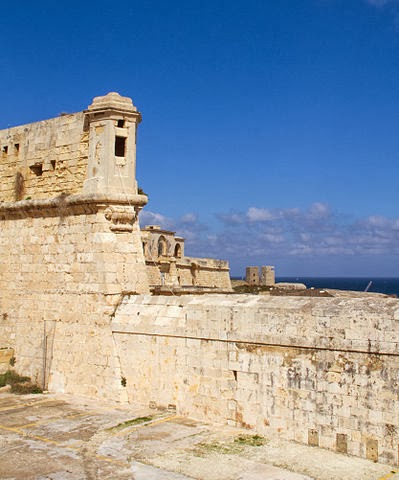
Photo by Tony Hisgett, Birmingham UK via Wikimedia

There is a well known and over-worn adage that authors should write what they know. While I do not entirely  ascribe to it, The Mischief of Robert Kyd would not work if written by anyone who lacked  an intimate knowledge of the locus of his story. The setting of the rising action and the key to all that follows is in Malta, an island nation that is a popular vacation spot for Brits but rarely visited by Americans, but a nation which Marsh, like Kyd, regards with  personal affection, insight and tolerance of its cultural idiosyncrasies that could only be reported by one who lived there. 

 If truth be told, a large chunk of Marsh's soul is Maltese. Having lived there off and on for roughly half of his adult life,  Marsh defines the country less by the architecture of its hundreds of Catholic churches or its historic harbor fortresses  than by the nature of its people and their penchant for survival and thumbing their noses at giants. I know because I have been there.  And while tourist brochures will tell you that Malta is a nation of two languages, Maltese and British English, that is only true when there are Brits about with either weapons brandished or  wallets open. Whenever things get hairy among Kyd's friends, they revert to Maltese.

The Maltese have their not too subtle prejudices, some of them not so remote to anyone who lived as I did during WWII, and it is a tribute to my beautiful and talented daughter-in-law Dr.Christina Bocklisch that she is welcomed on Malta in spite of the fact that she is German. The Maltese have a strong historic memory of every power who sought to besiege them, whether they be Ottomans or Nazis. And since their independence from Britain, a fairly recent event, they have acquired a talent for dissent, which is a good part of what attracts an iconoclast like Robert Kyd.  A casual observer or a tourist who finds Malta quaint will never have the slightest clue of the passions of its people, but Robert Kyd knows.  So does the author, who in 2001  lived at #1 Our Savoir Street where it meets Trig Manwell Demeck, marked by a street sign in which Trig Manwell Demeck had obviously been painted over the previous designation ' Prince of Wales Street.'  An independent Malta is still as new as its relabeled streets, and like the Malta in Robert Kyd, it has its growing pains. 

The legitimacy of the depiction of Robert Kyd's Malta is greatly enhanced by the efforts of its discerning editor Andrew, to whom the book is dedicated.  He is the author's two best friends, a citizen of Malta who Marsh met in a Dublin youth hostel during the early 1990s when he was a drama student at U.C.-Santa Cruz and was taking a break to see the world of Dylan Thomas and James Joyce.  While meeting them,  he met Andrew. And it was Andrew who encouraged him to come to Malta.

So now I have confessed to liking the cover and the setting, but what about the theme and style?   As to theme, I have read the earlier drafts of the book, and the final version does a far more poignant job of revealing  Kyd as not quite as hedonist he thinks he is.  Ironically, for all of his love of freedom, Kyd  finds himself trapped, and not by the Maltese authorities who have yet to learn tolerance of political expression or to exercise patience in dealing with dissent, but something much less predictable and equally foreboding to a  man like Kyd.   He finds himself locked into an unlikely friendship with a young Saudi name Owais with whom he shares not a single character trait and whom he initially tries to swat away as if he were a pestiferous flying insect, but for whom he ultimately finds himself taking incredible risks which force him into playing the hero's role.  And thus he finds himself pitted against a force he finds more threatening than  either political suppression or the limitations of individual freedoms. He finally faces the more foreboding  threat of exposure of his inner self, for underneath the veneer, Robert Kyd is a man of compassion and soul no matter how skillfully he hides  it.  And thus, Kyd's friendship with Owias and his subsequent forced self-awareness are at the very core of the story.  The rest of it, I leave to the readers.  Trust that it is a blend of humor, suspense and adventure in an area of the world infrequently explored by prose fiction writers.  

It is easy for me to comment on the element of style.  I can do it in a phrase-- 'not at all like mine.'  Marsh tells Kyd's  story without the confines of genre and with far fewer words than it would take me to write a prologue and a couple of chapters of one of my epic historical novels. I read Robert Kyd word-by-word and I am in awe of it, regardless of my blood relationship to its creator. It is by far my  favorite of his books.  Robert Kyd is not the kind of casual reading popular to travelers on continental air flights, although it may appear so by virtue of its length. It is a story to be appreciated for the beauty of the words, each one carefully chosen. Even the overly-maligned 'f' word is  riskily but appropriately used in the first paragraph, and although Google Secure Search blocks the word wherever it finds it, so far Amazon does not censure it with a 'bleep' or an excision of the word and a substitution of a black space as the Nazis did to letters from POWs during WWII. I had to go to my old Merriam-Webster to confirm earlier research that it has been in usage in Scotland since 1495! A new years ago, it was easily found in a Google search. As a 15th century Scot might have said, 'Wha' the fuck is goin' on here?" Which brings up the huge  issue of artistic license and integrity, topics for another post.

Here is a Google proofed version of the first few sentences that give us a glimpse of Robert Kyd.

'The day after is so simple.

I wanted to fuck on the balcony. Anke smiled and asked herself if I meant it. Bless her, she was game. Afterwards she lay on the floor by the open balcony with her toothbrush glass of spumante  and sulked because I wouldn't drink with her. I crawled over and kissed her thighs.'....


And later in a coffee shop, when a middle aged woman who appears engrossed in reading while having coffee looks up  from her book to listen in on Kyd's conversation with the Arab boy he cannot seem to ditch, Kyd responds with his trademark mischievousness.  Instead of expressing his annoyance in simple narrative, this is how Marsh depicts Kyd's  conduct.  

'The lady in the corner eavesdrops.  I take a straw from out of a nearby glass and aim it at her.  It dives to the floor and I wink.  She returns to her book.'

There are two negatives that I could not overlook mentioning and still claim any degree of integrity, neither of them relating directly to the merit of the book.  First, it is a bit pricey for its length, a problem  common to small and independent publishers, and the second issue is its limited availability in the US where it is on Amazon but only available through a third party vendor, the Book Depository. The author is checking with his publisher/distributor  in an effort to make the book more readily available at Amazon.com. All of his others are listed.

Thanks to all of you who joined me today. Considering that there are sites out there who permit authors to review themselves, a practice I find ludicrous, I am not the least embarrassed in reviewing Robert Kyd, and yes, I am hoping for a sequel.


~~I will be offering a giveaway of The Mischief of Robert Kyd on my Valentine's Day post, "Little Things I Love," so watch for it, or get a leg up and comment to this post. I will be mixing all of the responses together and I shall select two winners.~~

Author's note:  The Mischief of Robert Kyd is available in paperback as follows.
 1. at Amazon UK  http://www.amazon.co.uk/Mischief-Robert-Kyd-Michael-Marsh/dp/1780885644/ref=sr_1_1?s=books&ie=UTF8&qid=1388959531&sr=1-1&keywords=the+mischief+of+robert+kyd
2. at Amazon.com through third party vendors at http://www.amazon.com/Mischief-Robert-Kyd-Michael-Marsh/dp/1780885644/ref=sr_1_1?s=books&ie=UTF8&qid=1388959148&sr=1-1&keywords=The+Mischief+of+Robert+Kyd

Friday, December 6, 2013

The Green Woman - a novel in the making.

Yes, it's been a long time since I have blogged, and  there is a reason.  This year I decided to do the NaNoWriteMo novel writing exercise in which writers attempt to write a 50Kword novel during the 30 days of November.  And yes, I did it.  And I started late and finished early.

The idea is not to produce a finished, ready for the presses novel.  Writers are advised not to worry about editing or research--that can come later if the product warrants it.  So here is a glimpse at my historical paranormal mystery, The Green Woman.   The copy is raw, but what follows gives you an idea of what can be produced in less than a month if you neglect everything else.


THE GREEN WOMAN
      a novel by
 
Fashion by Josie Natori

LINDA ROOT


 ancestry images.com

CHAPTER ONE:  Once Upon a Time…

 The host who had taken my credit card and checked me into the castle that afternoon had not mentioned a costume party being held on the premises that evening, but I should have been forewarned. I knew that Ferniehirst Castle was a popular wedding site and often hosted private parties.  I had read the brochure.
My publisher had the entire site reserved for a book launch party on Sunday in the Great Hall, and I had understood that the castle was closed until the weekend, and I had mistakenly assumed that there were no intervening private bookings.  My entire reason for groveling for an early check-in was a chance to explore the castle without interference from my friends. While I had no intention of haunting the corridors with a candle to light my way as if I were Lady Macbeth, I would have appreciated a word of warning before sauntering to the guest kitchen in something as clinging as my favorite green Natori caftan.  It was not quite Victoria’s Secret, but hardly something I would have worn to an audience with the Queen. 
When the porter delivered my bags to the en suite accommodations in the afternoon, I had already been told that of the six newly appointed guest rooms, mine was the only one occupied until Friday when the others in my party began to trickle in.  Their late arrival was enough to make me stand up and cheer.  I had looked forward to visiting the castle for a long time and I was not the least bit keen on sharing my experiences with a group of people I loosely claim asfriends Colleagues would be the better word.  If truth be told, with the exception of my editor Katy Wjocik, I could barely endure riding an elevator with the others in the group.
Traveling as a part of the group that my publisher Simon Dirst referred to as ‘The Team’ was about as popular with me as riding in a closet casket with a flatulent corpse. But on this trip, the Fates were with me, because my publisher Simon and his administrative assistant Elle, who was the only person I had ever met who had been named after a magazine, were stopping off in London to cut a book deal with Princess Michael of Kent or some other lesser royal, and the photographer they had engaged to cover the launch had been invited to take photographs at a party being thrown by Wentworth Miller.  That left my agent Carol whose star chart had advised against flying from Sunday night through Thursday, and my editor and soul sister Katy, who as much as she loved me, refused to spend a single extra nanosecond in Simon’s company and was coming late and leaving early. She would not have come at all if I hadn’t promised to let her raid my shoe rack of my several pairs of Swedish Hasbeens and fix her up with my athletic younger brother when we got back to California. To pull it off I would probably have to confess to Iain exactly where I had last seen his autographed 2013 Red Sox Series Series ball, even though it would mark the very last time that Iain would agree to dog sit my Giant Wooly Alaskan Malamute puppy who call name was Max, short for Max Headroom.
The castle did not open to the general public other than during July and only accommodated private parties by prior arrangement and a fifty percent advance. The deal Simon had cut with the site manager had been from Friday noon through Tuesday. Because I was flying into Edinburgh on Tuesday, his salve girl Elle had booked me into a hotel on the Royal Mile. But once I realized the extent of my good fortune and that the others were not expected until Friday night, I saw no reason to plant myself in a hotel room in Edinburgh if there was any hope of talking the site manager into an early check-in.  Once my colleagues showed, I would belong to them, but until then, I had been given an unanticipated opportunity to explore the castle and the grounds on my own time just as the protagonist in my books had done. The launch may well have been my excuse for coming, but it had never been my reason. 
I rang up the number on my printed itinerary, and I spoke with the man who seemed to be in charge. At first he had been reluctant to agree, citing something about insurance and the fact that the kitchen in the guest wing was not equipped to serve meals until the weekend and there would be no maid service until Saturday.  I was not that easily discouraged.  I assured him that I was an able bodied American woman accustomed to fending for myself and totally capable of making a bed and navigating the short drive into Jedburgh to take my meals.  As long as the kitchen facilities in the guest wing had a fridge, an ice bucket and a teapot, I would be fine.  Besides, even though the launch had been Simon’s idea, ultimately I was the one who would be paying the substantial bill.  Or maybe the man just liked my voice and my book jacket photo.  Whatever had convinced him, he finally agreed. I charged the one day rate cancellation penalty at the Edinburgh hotel on my American Express card, collected my rental car from the hotel car park and headed for the Borders.
 After the ministerial act of checking in, I spent the remainder of the afternoon exploring the Riverwalk.  I knew the history of the place so well that when I stood on the bank above the Jed Water I could imagine a band of reivers crashing out of the woods.  I am one of those people prone to develop a romantic attachment to certain specific places. When I was a child it was the field I cut through on my way to public school in order to avoid the group of feisty Irish Catholics headed for Christ the King. When in college it was the abandoned orange groves that the college was holding for future growth.  In its wild unkempt state the defiant grove continued to blossom and bear fruit.  While much of the timber in Northumberland and on the Borders had been cut and much of the forestland was gone, there was a similar defiance in the lush woodland along the banks of the Jed Water. I felt as if I had always been here.
I recalled what Sir Walter Scot had written about this wild, compelling land: ‘Every valley has its battle and every stream its song.’

Scotland in late June is in twilight until near midnight, although by my standards, the evenings are far from warm.  Even in high summer, there is no such thing as a balmy evening on the Borders.   I bundled up as I would for a March evening drive into the SouthernCalifornia high desert town where I live, and I headed into Jedburgh. I arrived in the city hours after the closing of Jedburgh Abbey and the Queen of Scots House, which is now a popular museum, but I had not planned to tour them until the following day when I could take my time and savor what I found.  There would be time to visit the tourist’s haunts after the book launch was out of the way.  What I needed now was food.
 I was not in the mood for a hotel restaurant.  Sitting alone in a well lighted dining room watching lovers gaze into one another’s eyes while I pretended to be reading an unbearably dull book would be exceedingly depressing.
I went hunting for a friendly pub.  
If at first the crowd seemed unaccustomed to sharing space at the long mahogany bar with a lone American woman while they watched World Cup Rugby on the HDTV mounted above the bar, they were fine with me after I announced that my brother Iain played on the Eagles, the American member of the International Rugby Union. I had not known that Rugby was to Jedburgh what American football is to South Bend, Indiana and Starkville, Alabama, home of the Crimson Tide.  My self-introduction led to an enthusiastic offer to join me in a comparative analysis of the local ales in appreciation of my familiarity with the Rugby term ‘scrum half.’   I was treated as a celebrity.  I wished I’d worn my Eagles Supporters polo but my new friends seemed to like my cashmere tank just fine.
We were boisterous enough to have driven the brooding guy in the blue on white Societa Sportiva Calcio tee shirt back into the streets.  My luck, I thought.  There he was,  brutally handsome, in a youthful Marcello Mastriani sort of way, and I had to go drive him off with my vestigial Cleveland Sports fan manners.  Or maybe he was just so far into Napoli soccer that he couldn’t stand to watch a rugby match. Another pint and I had forgotten what the Italian footballer had looked like.  One more and I had forgotten what I looked like.  Then it was time to go.
Four pints of ale, two propositions and a proposal of marriage later I was ready to go back to the castle.  The food had been excellent, the company entertaining, and I would have stayed longer had I been booked into the Spread Eagle Inn where the Queen of Scots had stayed in the autumn of 1566 or some other spot within staggering distance of the pub.
I promised the lads to stop by again before I left the Borders and invited the lot of them to drop in on my Sunday book launch.  They did not seem the type to be that interested in historical novels, but free food and drinks seemed to win them over.   I left the pub with a fuzzy glow.  It was most fun I’d had in a bar since the Indians made it to the Series—well, perhaps not quite that long ago.
I headed back to Ferniehirst well before dark, which, of course, leaves a somewhat misleading impression of my time spent belly-to-the-bar. When I left the pub and walked to my car, the sky said eight but my watch said ten-half, which is Brit-speak for a long time past the witching hour.  Had I been stopped by the polis, my performance on sobriety tests would not have been pretty.
A monster SUV, I think it was a Land Rover, pulled out of the car park right after I did and I considered moving to the roadside to let him pass so I would have a set of tail lights to follow, but since had no idea where the SUV was headed, I decided against it. I had only two miles to travel and the road to Ferniehirst was not exactly bumper to bumper at close to midnight on a weekday.  The final leg of the journey was on what property owners in Scotland call a limited access road, which means that the right to pass and the duty to maintain the roadway are within the discretion of the land owner. A few potholes here and there announced that the farmers near Ferniehirst coveted their privacy. 
 In spite of the fact that this was a road I had only traveled once and therefore I should have been paying attention, I let my mind wander from the driving task, which was not particularly prudent since I had a belly and a bladder full of the local ale and a nasty dose of jet lag.  I did not recall turning off the highway until I reached the grounds without the slightest clue of how I got there. But driving in some sort of dissociative state is not a rare occurrence.  It even has a name—cognitive distracted driving.
 I had looked it once up on Wikipedia. However, it was one of life’s experiences taken best when sober. 


When I reached the car park at Ferniehirst, I did not waste time scouting my surroundings because by then I badly needed a lavy.  But although my nature call was inspiring me t rush right along, I am certain there had been no cars in the car park when I returned, and there had been no hint whatever of a party going on:  thus, - when I settled in my room with my very marked-up  copy of  Steel Bonnets by G. MacDonald Fraser,  I was surprised to hear laughter wafting  up the stairs, from the direction of the Great Hall.   The noise from below was not so raucous that it would have kept me awake and I would have ignored it altogether had I not decided to brew a glass of herbal tea. And yes, American brew ‘brew’ and Brits brew tea.
The kitchen in the guest quarters is for the exclusive use of the occupants of the six guest rooms, five of which I knew would be vacant for at least three more days.  I was not the least concerned about heading to it in my green Natori gown.  I had no intention of venturing down the stairs to crash someone else’s wedding. My own had been mistake enough.
But in retrospect, I should have known myself well enough to have grabbed a robe or wriggled into a pair of jeans, because while the tea was brewing, my curiosity overcame my prudence and I made my way to the head of the stairs.  I was aware of two separate sets, one opposite the entrance to the kitchen and the other down the hall near the longue.  I am one of those people who actually studies the floor plans posted in my doctor’s office displaying the exit route in event of fire, floor or earthquake in a parade of little green arrows.  I like to plan my physical escapes in advance.  The emotional escapes are a bit trickier.
According to the floor plan I remembered from the webpage, the narrow flight of stairs I had selected did not reach the ground floor. They opened into a corridor on the First Floor, where a wider set of elegant stairs accessed the ground floor near the entry to the Great Hall.  I descended far enough to confirm that indeed there was a function of some sort going on downstairs. 
But as I peeked down the stairwell, I was utterly confused.  Either I had become disoriented and taken the wrong staircase or there had been something hallucinogenic in my ale.  Nothing was where I expected it to be.
From what I could observe of the function in the Great Hall, the group congregated there hardly warranted so large a room.  I guessed the crowd to number less than thirty, and while it was not a large group, it certainly was a strange one.  When I saw the mode of dress, I at first assumed it was a Scottish theme wedding without kilts.  Then I looked closer.  If it was a wedding, someone had forgotten to invite Romance, Joy and Conviviality. I had seen happier faces at gravesites. I also noted far fewer women than men, and the group seemed sexually segregated.  I did not stop to ponder who was getting married.  I was wondering who had died. Even Nathaniel Hawthorne would have written a happier scene.
   The room décor seemed more rustic that I had remembered it and the sconces were not lit.  The only light came from candelabra on the banquet table and sideboard. The women hovered together at the far end of the room and from my vantage point, it looked very much as if they were busy with needle work, no small trick in so dim a light.  There was no music or dancing, and it was definitely not my idea of a celebration. If anything, it was a complete anachronism.
And then it struck me – an anachronism. Anacronism was indeed the operative word, and it thoroughly explained what I was witnessing.  I felt both foolish and relieved.
There were countless sub-groups of the Society for Creative Anachronism scattered around the world, and many of them were in the UK.   I had given a lecture and reading at an event at the U.S. headquarters in Milpitas, California and the members were every bit as committed to historical accuracy as the group in the Great Hall. They were just a great deal happier.  California sunshine has that effect, even as far north as Milpitas.  What better venue for a chapter meeting of the SCA than a site as culturally rich as Ferniehirst.  Had I not been tired and a wee bit drunk, I would have recognized the meeting for what it was immediately without the drama and uncertainty.  From the appearance of the costumes, some tailor or seamstress in Jedburgh of Kelso was making a fortune selling Jacobean costumes as authentic as anything I had seen in the museums of Edinburgh and London. 
I was confident that I had solved the mystery, but I was still curious as to how the participants had arrived without leaving cars in the car park.  Then I recalled an enterprise in the Desert called Brenda’s Bingo Buss which specialized in hauling Soroptimists and members of the Republican Women’s Club to Laughlin, Nevada for an occasional day of wrestling with the one arm bandits in the casinos along the Colorado River. The group I had observed had no doubt arrived by chartered bus from Jedburgh, and the bus was probably hidden from view and parked behind the barn. 
With all of my nagging questions answered, I headed for my room.  My first problem was that I hadn’t the slightest idea of how to get there.  And then it all went weird again.
Somehow I had gotten myself totally turned around.  There were clusters of men about, but either they had chosen to ignore me because of my state of undress, or they simply had not seen me.  I definite was not suitably attired to go sashaying up to one of the somber women in the Great Hall to ask directions.  But obviously I had not been thinking clearly.
All I needed was to take a minute to get my bearing and the solution was apparent. I meandered back toward the entrance to retrace my steps.  I found the stairway near the entrance and hurried to the second floor.
Scottish and English houses number the floors in their multi-storied buildings differently than Yanks do.  One enters on the ground floor and climbs or takes an elevator to the first floor.  Our accommodations were on the second floor, which is three flights up.  It apparently makes perfect sense if you happen to be British and none at all to an American.
 At any rate, after I negotiated the wide stairs as far as the first floor landing, they went no further, and only when I saw a doglegged short hallway did  I find the next flight up.  The stairwell was much narrower than I expected which is probably why the luggage laden porter had avoided it, but according to the floorplan I had perused, it would  deliver me quite nicely to a hallway that accessed the second floor kitchenette where I had left my tea.
I only made it half way up when I saw a man heading down.  He had a quick, determined step and we might have collided if I hadn’t announced my presence with a cough.  He  stopped short and so did I.  We faced one another like two drivers going in oppositie directions on a one lane bridge.  He looked to be in his thirties and was taller than most Scots. His hair was loose and long, and in the dark corridor seemed almost black.  His stance exuded confidance and something else—the current American slang for it was attitude.  He wore a quilted jack of ruby velvet styled like something that the Scottish rock star Ian Anderson of  Jethro Tull might wear in concert. He had a long face with chiseled features and while I was too far from him to see the color of his eyes in the diminished light,  I felt them boring into me. 
Then he spoke.
“When Ah first saw ya climbin’ up  ah though ya were an apparition, you being near naked and a wee bit greenish just like in the ghost stories my da used tae tell  and all, but closer up ya seem real enough,” he said. “Plenty a’ room to let ya by,” he added, resting against the stairwell to make room for me to pass. 
Did he think I had been born yesterday?  There was not a chance in hell that I would put myself within his reach.  I had no intention of capping off my first night on the Borders in a skirmish with an arrogant drunk in a stairwell—and  not just a drunk. His  comment on my clothing had been inappropriate and rude.  In any other setting I would have been confrontational.  If this had been in an elevator in a public building I would called him on it, or at least responded with a snappy retort, but this was not an ordinary night.  I had no intention of  squeezing past him on the narrow staircase, so  I a spun on my ballerina slippered  feet and ran.  With him standing near the landing I had no choice but down, and as I descended, I heard him laughing at me.
 When I reached the ground floor,  the double doors into the Great Hall were opened to an interior nothing like I had remembered it. I ran past the doorway without a thought of entering.  I tried to recreate the path taken by the porter on my arrival and chastized myself for not paying more attention  instead of trailing after him as if I were a grand dame boarding the Lucitania behind a servant with a cart of streamer trunks. 
I was not alone in the corridor.  Men had gathered in clusters and as I rushed by them,  they seemed to be.speaking Scots. Since this was rural Scotland there was nothing  the least bit strange  in that. Although I did not speak it,  I had assimilated enough of it when I was doing my research to know it when I hear it.  I nearly collided with a pair of costumed men who were absorbed in animated  conversation as I scurried past, but they did not seem to notice.  If truth be told, it was as if they could not see me. 
The confusing floor plan and left me stymied. I had made Ferniehirst  into a research project while  I was writing my last two novels and thought I understood the layout and the changes produced in the recent restoration.  But I could not find access to the wings,  and I ran into a hallway that ended in a ‘t’ that should have been an ‘l’.  A room that I was certain opened into other rooms had no egress.  I even checked behind the curtains and tapestries for hidden doors.  Not all of the inconsistencies could be blamed on pamphets I had read or webpages I had visited.
I was certain I would be able to recognized the entrance to the turret library.  Even in my haste to reach my suite that afternoon I had stopped to take a peek inside.  For someone who is a writer, a library is a treasure room and the books inside are precious jewels.  However,   the entrance to the library was not where I had remembered it to be, and I could not blame that on the ale I had consumed.  I had been completely sober when I arrived in the afternoon, and after my encounter on the stairs,  I was entirely sober now. It was the library that was off kilter.
When I did find the library door it appeared to access the circular library on a tangent when  I had been certain that it had opened into the room where the circumference of the turret protuded into the hall.  I was also surprised to find it locked and latched.  That afternoon the man who greeted me explained that the turret library was usually locked at night because of the value of its contents,  but he offered to make an exception and  keep it open since I was the only guest. It was to be the site of the private reception the laird was hosting after the book launch and I would be welcome to peruse it at my leisure to see if there were materials I might find useful in my remarks.  It seemed that I was expected to make a speech.  At least  I had not impressed him as a likely book thief. 
Obviously he had forgotten about the party booked into the Great Hall when he made the offer and later thought better of  leaving the library unsecured when there were outsiders on the premises.  Libraries and studies  in British properties as old as Ferniehirst are often filled with first editions and their walls adorned with painting of long dead ancestors, which is probably why so many of them are rumored to be haunted. I had read that the library at Ferniehirst was full of first editions of celebrated tomes on the history of the Borders  and decorated with a parade of portraits of  famous and infamous Kers.  I also knew that was a thriving clandestine market for anything elegant, old  and large enough to make an impressive wallhanging or coffee table book, and there were plenty purchasers  who lacked  regard for such triviliaties as  provinence, something conveniently blamed on the Russian nouveau riche.  No wonder it was locked.    I was making far too much a mystery of  matters  that were simply explained.
At least I seemed to have evaded the party guests and escaped any further unsolicited comments  from the man on the stairs. I slowed my pace to something resembling  a power walk  and tried togive theimpression of someone who knew where she was going,  in case anyone was looking.  I ventured into an alcove and found a strange staircase that appeared to curved back toward the turret,  and after a few cautious steps upward, I was numbstruck.  I had discovered  one of the counterclockwise  staircases that made Ker houses unique—a staircase with a counterclockwise spiral that had  given an advantage to left-handed defenders--kerry- fisted men, they were called.
After my encounter with the man on the other set of stairs  I felt more in need of protection from those coming down that from intruders headed up, and what common sense I had gave notice that this was not a good night for me to venture into narrow stairways.  But  I had never let prudence overcome curiosity, and I could not resist  the urge to explore.  This was one of the features of the castle that appears  prominently in my novels,  and it was the castle’s  history that had drawn me here—a symbol of theuniqueness of  the castle’s inhabitants and the  wildn nature  of the Border Reivers. 
A left-handed man with a Jed Axe on a counterclockwise staircase had a decided advantage in a closed-quarters fight.  Walter Laidlaw had written a poem about it that is read aloud each year at the beginning of the Jed Heart Festival.  It commemorates with pride the occasion when the Fernirhirst Kers purged the castle of its  English invaders  and after butchering them decapitated them and played  football with their severed heads. 
There were similar stairs in the museum called Queen Mary’s House in Jedburg, which I had planned to visit in the morning.  The house had  never belonged to Marie Stuart, the tragic Queen of Scots. It was  a residence the queen  had leased from her  friend and supporter  Sir Thomas Ker of Ferniehirst after her lodgings in the Spread Eagle Inn caught fire.  She had been in Jedburgh for the assizes in the autumn of 1566, to establish her authority on the Borders and to escape the bizarre misconduct of  her syphyllitic husband Henry Stuart, the notorious Lord Darnley who was briefly her consort.  When she had refused to peititon Parliament for a grant of the crown matrimonial, his  debachery  had  sunk to  the depths of hell and the queen began to fear for her life, or so the legend goes.  In any  event, the queen of Scots became very ill while lodged  at the Ker house in the town.  At one point, her attendents and physician  believed that she had died and her chambermaids  opened the windows of her bedchaber so her soul could escape to the heavens. Fortunately a  French surgeon who name was Arnaud was travelling  in her party and he was not convinced that the queen was dead. He ordered the servants to close the windows and he commanded the  queen’s ladies-in-waiting to massage her extremeties. They he had called for mirror and when the queen’s faithful Marie Seton held it before the queen’s face,  a fine mist condensed upon the glass, coming from Marie Stuart’s mouth and nose.  After the surgeon forced some watered wine down her gullet,  the semi-conscious queen  suffered a spell of projectile vomiting during which she expelled evil smelling  green bile, which some folks in her party considered evidence of poison. No one has  isolated the nature of her illness. Like most events in her life, it is still debated.  Modern diagnosticians  suspect pneumonia and nearly all romantic writers think of arsenic.  Elizabeth’s  spymaster Walsingham,  a radical anti-Marian, had bragged of  poisoning women by dusting the drapes  of their beds with arsenic.  The other popular suspect was the queen’s  husband Henry, who arrived in Jedburgh after the worst of her illness had passed, made a few obsequeous  gestures and rode north again,  and thus, the mystery remained unsolved. But then, Marie Stuart’s life was a series of who-dunnits.
There also are similar counterclockwise stairs to the ones in Jedburgh at the ruined fortress of the Cessford Kers near Roxburgh. Left-handedness is a family trait. I had read that there was a higher incidence of lefthandedness in the various branches of the Ker family  than recorded anywhere else other than in the ancient Biblical  tribe of Benjamin.  That eliminated two possible lines of genetic research from my family tree.  I could barely hold a pen in my left hand without it fumbling, let alone use it to wield an axe.
 Since I was more fascinated by the staircase than frightened of the man in velvet who had startled me, and no one seemed to be in hot pursuit,  I sat on the stairs and held out both hands to touch the walls in some sort of ritual that I hoped would bind me to this ancient place, a declaration that I  had finally made it here.  If I had been less responsible I would have carved my initials into the rock with a fingernail or hairpin.
Visiting Ferniehirst had been number one of my list of things to do before I die for many moons. The counterclockwise staircase was among the features of the castle  which had drawn me here.
When I closed my eyes and looked inward , I could sense the presence of the Ferniehirst Kers descending the stairs with Jed Axes swinging free, vanguishing the more restricted right-handed Scotts of Bucchleuch, and  yelling the battle cry  ‘A Ker’ as they went about busting heads and severing limbs.  As gruesome as it must have been,  in a strange way I saw an element of romance in the old stories.
In spite of my fascination with the stairs, I could not escape the thought that they should not have been accssible from the spot where I had found them. My study of the various renovations at Fernehirst had mislead me into believing that the lower levels of the kerry spiraled staircases such as this one had been blocked off  or removed in a remodel during the middle of the twentieth century during a period when the castle had been converted for use as a hostel. I had read the the stairs upon which I sat wasonlu accessible from an obscured passage not much bigger than a crawl space opening into a higher level of the library.  Obviously the account I had read was dated before the recent renovations performed after the present owner reclaimed the residence from the Scottish Land Trust that had been operating the  hostel.  I laughed at my attempt to attach a paranormal explanation to a mystery I was certain I could solve with an updated set of blueprints and some architectural drawings more recent than the ones printed in the materials I had studied when I wrote my books.  
No matter how interested I was in my surroundings, I could hardly spend the night hunkering in a stairwell.  I had not recovered from my strange encounter with the man in the ruby velvet coat waistcoat but I was convinced that he was no more sinister than the placement of the stairs—I pegged him as a  club member  looking for a Men’s Room.  I decided to forego this particular flight for fear it would abruptly end when it met up with the newly rehung first floor ceiling.   When I reached the ground floor, I walked quickly through the gallery to the stairway used by tourists during the month of July when the castle was opened to the public.  There was no one else in sight or sound.  The interior seemed familiar, right down to the floral arrangements in the  foyer.  On a sideboard I found  a placard displayed, announcing my Saturday book launch.  I judged that it had  provided little enticement to the standoffice group of anachronistic  Scots who had apparently called it an early night and left. 
Thanks to my fertile imagination,  my first night at Ferniehirst had been an adventure I would  lookback upon with amusement. I remember my childhoodbelief that there were lions and tigers living in our basement, a fear I carried with me until we moved to  Southern California where the only basements were the bargain basements at the high tickets department stores in the malls.  I thought I had outgrown the childhood fantasies, but then, I was a writer. No matter how much a slave I was to historical accuracy,  I had chosen fiction for a reason.
            Luck was with me. Everything about the place seemed familiar and my sense of control returned.  I climbed the proper stair case and easily located  my room.  I locked myself  inside and helped myself to a brandy from the bottle I had stashed inside my  suitcase.  I had no interest whatsoever in a glass of tea,  hot or cold,  and I had done enough wandering around the castle to last at least until  mornining. I was slightly chilled but the brady would do a better job of warming me than anything plucked from a tea tree.  I draped a shawl on my shoulders as much to cover me as to warm me and I walked to the window. Night had finally descended on the Borders,  but it was not entirely dark. There was a moon. I could see the archery field in the distance where the owner kept a herd of Icelandic sheep.  They were as white as new snow. The only car in the car park was mine. The house had become sepulchral,  as silent as any tomb.  The only unnatural light was from an electric fixture by the entrance.  It was as if I were the only living thing on the castle grounds.
Sleep was out of the question and I had lost my  desire to revisit MacDonald Fraser’s fine history of the Border Reivers,  even though it is one of my favorite books.  I put his account of  the steel bonneted warlords who  had inhabited this wild land aside to enjoy on another day.  Reading of reivers seemed superfluous when I could not shake off the inane thought that I had encountered the ghost of one of them. He had a commanding presence, and an air about him.  That did not disqualify him as a Borderer.  The aristocrats among them had often been the most vicious of the lot, a list replete with Kers and Scotts and Maxwells.  Kers had served as wardens of the Middle March, often rustling livestock at night and tracking the rustlers in the morning. There was a popular joke making the rounds when they were serving as wardens  noting that the Kers  had a very poor record of catching themselves. 
I reflected on at the bizarre events of the evening and decided that there was a logical explanation for each of them , but I still could not relax.  It had nothing to do with having been lost in the castle.  It had to do with the man.

The story develops along several lines, and  the reader is not quite certain how much of my protagonist's adventure is real and how much is a creation of her fertile mind.  One thing does become obvious early on --the man in the stairwell suspects that she is the one who is the ghost, the legendary Green Woman of Ferniehirst.   Writing this one was great fun.